Pokemon Card Scanner and Ludex can both help identify physical Pokémon cards, but they serve different collecting priorities. Compare their scanning focus, valuation sources, pricing considerations, and best use cases before choosing.
Pokemon Card Scanner runs on iOS and web. Get pokemon card scanner vs ludex app when you are ready to scan.
What Is the Difference Between Pokemon Card Scanner and Ludex?
The Pokemon Card Scanner vs Ludex comparison is mainly about focus. Pokemon Card Scanner is built for collectors working with physical Pokémon cards and is available through iOS and the web. Ludex presents itself as a broader card scanner covering sports cards and trading card games, including Pokémon.
That difference affects the overall experience. A Pokémon-first tool can concentrate on Pokémon card identification, set recognition, collection organization, and relevant price checks. A general card platform may be more practical for someone whose collection also includes baseball, basketball, football, or other trading card games.
Neither approach is automatically better for every collector. The right choice depends on what you collect, which marketplace you use for price comparisons, and whether you want a specialized Pokémon workflow or one place for several card categories.
Scanning Focus and Identification Workflow
Ludex describes its core workflow as scanning a card to identify it and provide price guidance. Its published materials emphasize sports and TCG coverage, so Pokémon is one category within a larger card catalog.
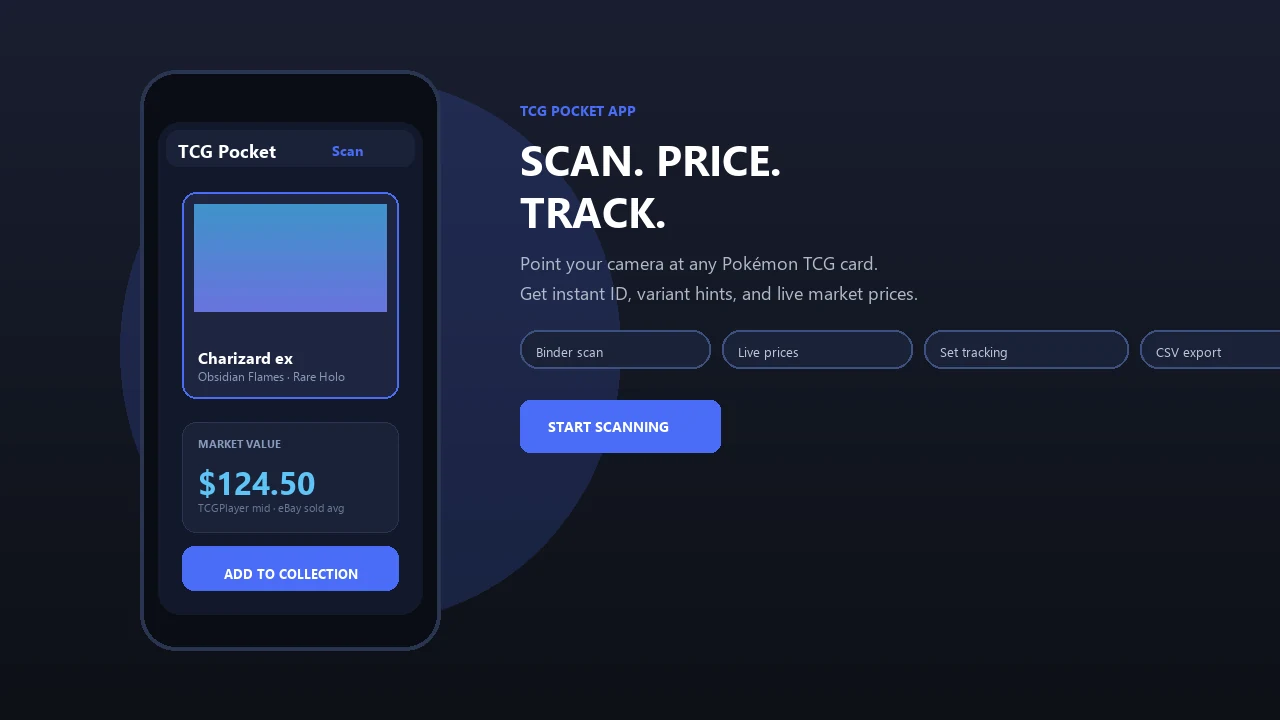
Pokemon Card Scanner is intended for a more direct Pokémon workflow. A collector can scan a physical card, review the proposed match, and use set information and card details to confirm the result. This is useful when sorting a Pokémon binder, cataloging recent pulls, or checking cards before a trade.
Whichever scanner you use, the photograph matters. Identification tends to work best when the entire card is visible, the card is placed on a plain background, and glare does not cover the name, set symbol, or collector number.
- Use bright, even lighting without direct reflections.
- Keep the card flat and inside the camera frame.
- Remove sleeves that create glare when practical.
- Verify the set, card number, language, and finish after scanning.
Market Prices and Valuation Sources
Ludex says its market values are based on eBay completed sales and other marketplaces. Its pricing materials also indicate that paid tiers can include published eBay listings. This approach can be helpful for collectors who regularly buy or sell through eBay and want comparable transaction data close to their scanning workflow.
No single marketplace represents a universal Pokémon card value. TCGplayer is commonly used by collectors in the United States, Cardmarket is particularly relevant to European buyers and sellers, and eBay sold results can help with unusual variants, graded cards, and condition-sensitive sales.
Differences between these sources are normal. A TCGplayer market price may reflect a different pool of listings and transactions than eBay sold results. Cardmarket prices can also vary because of region, language, shipping costs, and local demand.
Treat any scanner valuation as a starting point rather than a guaranteed sale price. Before buying, selling, or trading an expensive card, compare recent results from the marketplace you plan to use and check whether the displayed value matches the correct printing.
Which Scanner Is More Accurate?
Accuracy has two separate meanings in a card scanner comparison: identification accuracy and price accuracy. Identification asks whether the tool found the correct card, set, number, language, and variation. Price accuracy asks whether the selected market data reflects the specific copy in front of you.
A raw accuracy winner cannot be established without a controlled test using the same cards, lighting, devices, and verification standards. Modern English cards with readable collector numbers are generally easier to distinguish than vintage cards, parallel finishes, promotional printings, foreign-language cards, and visually similar reprints.
Condition creates another limitation. A camera scan can help identify a card, but collectors should manually inspect corners, edges, centering, surface wear, creases, and print defects. These details can materially change value and may not be represented by a general market estimate.
- Confirm the collector number and set.
- Check whether the card is standard, reverse holo, or another variant.
- Match the language and printing.
- Review condition before relying on the estimated value.
Price, Access, and Collection Features
Subscription prices, scan limits, and included features can change, so compare the current terms shown by each service rather than relying on an older review. Ludex publishes tier information for features such as collection tools and eBay-oriented listings, but the value of those options depends on how often you scan and sell cards.
Pokemon Card Scanner supports an iOS and web workflow for physical Pokémon cards. Web access can be useful when researching from a desktop, while the iOS experience is suited to scanning cards near a binder, storage box, or trade table.
When comparing cost, look beyond the advertised fee. Consider whether a plan limits scans, which pricing sources it displays, how collection records are organized, and whether its card coverage fits what you actually own.
- Occasional collectors may prioritize quick identification.
- Active sellers may care more about recent comparable sales.
- Set collectors may prioritize card numbers and set mapping.
- Multi-category collectors may prefer broader sports and TCG support.
Should You Choose Pokemon Card Scanner or Ludex?
Choose Pokemon Card Scanner if your collection is primarily Pokémon and you want a focused way to identify physical cards using iOS or the web. It is the more relevant fit for collectors sorting Pokémon sets, reviewing binder cards, and checking card details without making sports cards the center of the experience.
Consider Ludex if you collect both sports cards and TCG products or prefer a workflow built around eBay completed sales and other marketplace information. Its broader coverage can reduce the need to use separate identification tools for different card categories.
The best decision also depends on where you transact. Someone selling mostly through eBay may value eBay-based comparisons, while a Pokémon collector using TCGplayer or Cardmarket should cross-check those markets before setting a price.
- List the card categories you collect most often.
- Identify the marketplace where you usually buy or sell.
- Test difficult cards, including older printings and foil variants.
- Confirm what each current plan includes.
- Manually verify valuable cards before completing a transaction.
For many collectors, the scanner is the first step rather than the final authority. Reliable decisions combine card identification, variant confirmation, condition assessment, and recent sales from the relevant market.