Pokemon Card Scanner and TCG Companion both help collectors identify Pokémon cards and research value, but they approach the job differently. Compare scanner access, pricing context, graded-card coverage, and collecting features before choosing the right tool.
Pokemon Card Scanner runs on iOS and web. Get pokemon card scanner vs tcg companion app when you are ready to scan.
What is the difference between Pokemon Card Scanner and TCG Companion?
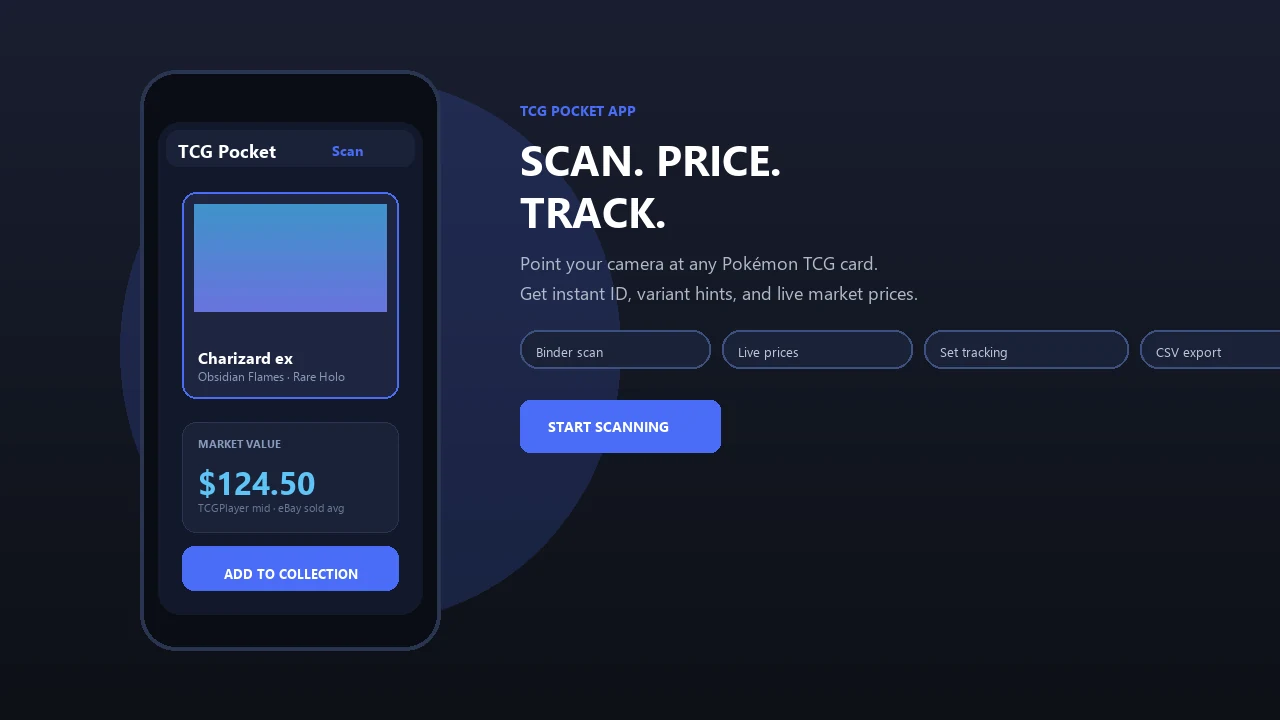
The Pokemon card scanner vs TCG Companion comparison is mainly about how you want to identify cards and research their value. Pokemon Card Scanner is designed for quick physical card scanning and price checking on iOS and the web. This makes it practical when sorting a binder, reviewing cards at home, or checking a potential purchase without relying on a single device format.
TCG Companion describes itself as a Pokémon-focused price scanner. According to TCG Companion, it identifies English cards, displays current market value, provides graded pricing tiers, and links users to live eBay listings. Its focus is therefore broader than basic card recognition, particularly for collectors interested in comparing raw and graded cards.
Despite the name, TCG Companion should not be confused with an official app from The Pokémon Company. TCG Companion's own published comparison identifies Pokémon Card Dex as the official app. Card Dex is presented as a collection and set-tracking option with scanning support, while TCG Companion is a third-party price tool.
Card scanning and identification
A useful card scanner should reduce the time spent typing names, set numbers, and variants into a search box. Pokemon Card Scanner centers the workflow on scanning physical trading cards, reviewing the likely match, and moving into price research. Access through iOS and the web also gives collectors a choice between phone-based scanning and browser-based collection work.
TCG Companion says its scanner identifies English Pokémon cards. That defined language coverage is worth noting if your collection includes Japanese cards or other international releases. Confirm that the exact set, language, and variant you own is supported before treating any automatic identification as final.
No scanner is immune to difficult photos. Sleeves, glare, low light, cropped borders, similar artwork, and parallel foil treatments can affect a match. For either service, verify these details after scanning:
- Card name and collector number
- Expansion, release year, and language
- Holo, reverse holo, promo, or other variant
- First Edition or unlimited printing where relevant
- Raw or professionally graded condition
Raw card prices and marketplace context
Price coverage matters more than a single headline number. TCG Companion promotes current market value and direct links to live eBay listings. Those links can help you inspect the cards currently available, compare grades, and see how sellers describe condition. However, live listings generally represent asking prices rather than confirmed transaction values.
Collectors often compare asking prices with sold examples before estimating a card's value. A seller can list a card at any amount, so an active listing does not prove that a buyer will pay that price. Relevant sold comparisons, sometimes called sold comps, are usually more useful when they match the exact printing, variant, language, and approximate condition.
TCGplayer offers another useful reference point. Its official app description says users can scan, organize, and track market prices for cards from the TCGplayer marketplace, while the TCGplayer Help Center documents its scanning workflow. Marketplace-linked pricing can provide current context for raw singles, but collectors should still review condition and recent activity rather than treating a market figure as a guaranteed sale price.
Graded card value coverage
TCG Companion has a clear stated advantage for collectors who regularly research graded cards. The service says it provides eight graded tiers across PSA, BGS, CGC, and SGC. That can make it easier to move from an identified card to an initial comparison of potential values at different grades.
Graded tiers are reference points, not promises about the grade a raw card will receive. Professional grading considers centering, corners, edges, surface quality, authenticity, and other factors that a quick scan cannot fully establish. Differences between grading companies, label generations, qualifiers, and buyer preferences can also affect sale prices.
Pokemon Card Scanner is the better fit when the immediate task is identifying physical cards and beginning price research through an iOS or web workflow. TCG Companion may be preferable when graded-tier lookup across its stated grading companies is central to your process. In either case, use certification details and closely matched sold results when evaluating an already graded card.
Price, access, and overall value
The better value depends on how frequently you scan cards and which research steps you want in one place. Pokemon Card Scanner supports iOS and web access, which is useful for collectors who want to scan from a phone and continue researching through a browser. TCG Companion's value proposition is built around Pokémon card identification, market values, graded tiers, and eBay listing links.
Subscription terms, feature limits, and introductory offers can change. Compare the current checkout or App Store information before choosing, rather than relying on an older quoted price. Look beyond the lowest advertised cost and consider whether the plan includes the scans, saved cards, pricing views, and graded information you actually need.
A practical value checklist includes:
- Number of cards you expect to scan each month
- Need for both iOS and browser access
- Coverage for your card languages and sets
- Raw price research versus graded-tier research
- Ability to verify variants after identification
- Quality and relevance of marketplace references
Which Pokémon card tool should you choose?
Choose Pokemon Card Scanner if you want a straightforward physical-card scanning workflow with access on iOS and the web. It is suited to collectors who need to identify cards, check likely matches, and begin value research while organizing binders, purchases, or sale candidates.
Consider TCG Companion if you primarily collect English Pokémon cards and want its stated combination of current market value, eight graded tiers across PSA, BGS, CGC, and SGC, and links to live eBay listings. The graded-tier emphasis is particularly relevant when you routinely compare slabbed cards or consider whether a raw card may be worth grading.
For raw singles tied specifically to marketplace activity, TCGplayer is another comparison option because its scanner and market prices connect to its own marketplace. For a brand-native collecting experience, Pokémon Card Dex is the official app identified in TCG Companion's published material, with scanning and set-oriented tracking rather than the marketplace-pricing emphasis described for the other tools.
Whichever tool you select, treat automated identification and displayed values as starting points. Confirm the card, inspect condition, compare relevant sold examples, account for selling fees, and remember that actual value is the amount a buyer is willing to pay for that exact card.